The Quiet Drain: Quantifying What Legacy Infrastructure Is Actually Costing Your Organization in 2024
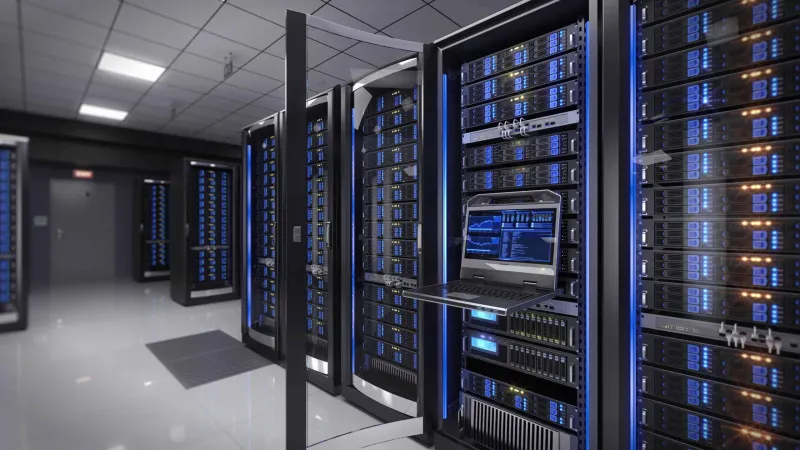
Photo: server room legacy technology versus modern cloud infrastructure comparison business, via robots.net
The Comfort of the Familiar
There is a particular kind of organizational inertia that surrounds legacy technology. Systems that have been running for fifteen or twenty years carry with them a sense of institutional permanence. They are paid for, understood (at least by a shrinking cohort of long-tenured staff), and functional in the narrow sense that they have not catastrophically failed. For finance committees already managing capital allocation across dozens of competing priorities, the case for replacing something that is technically working can feel abstract and difficult to justify.
This comfort is expensive. And in 2024, as cloud-native infrastructure matures and the operational gap between modern and legacy systems widens, the cost of inaction has become quantifiable in ways that should concern every CFO and CIO at a mid-market or enterprise organization.
Defining the True Total Cost of Ownership
The fundamental error most organizations make when evaluating legacy systems is measuring only the costs they can see. Licensing fees, maintenance contracts, and the salaries of internal support staff appear clearly on the balance sheet. What does not appear with equal clarity—but is no less real—is the full scope of costs that legacy infrastructure generates across the organization.
A comprehensive total cost of ownership (TCO) analysis for legacy systems must account for five distinct cost categories.
Direct maintenance costs include vendor support contracts (which typically escalate 5 to 8 percent annually for aging systems), hardware refresh cycles, and the internal labor required to keep systems patched and operational. For a large enterprise running multiple legacy platforms, these costs frequently exceed $10 million annually.
Productivity drag is the cost that most organizations are least equipped to measure. Legacy systems are slower, less intuitive, and more prone to downtime than modern alternatives. When an employee spends an additional twenty minutes per day navigating an outdated interface or waiting for a system to process a request, that inefficiency compounds across thousands of employees and years of operation. A conservative estimate for a 5,000-person enterprise suggests productivity losses in the range of $3 million to $7 million annually, depending on the intensity of system use.
Integration tax refers to the ongoing cost of building and maintaining custom connectors, middleware layers, and workarounds that allow legacy systems to communicate with newer platforms. As the enterprise technology stack grows more sophisticated, the integration burden on legacy infrastructure intensifies. IT teams report spending 30 to 40 percent of their development capacity on integration maintenance rather than innovation—a staggering misallocation of skilled labor.
Regulatory and compliance exposure is increasingly significant as data privacy regulations evolve. Legacy systems were not designed with modern compliance requirements in mind. Retrofitting them to meet GDPR, CCPA, HIPAA, or SEC reporting standards is costly and imperfect. The residual compliance risk—measured in potential fines, legal fees, and reputational damage—represents a contingent liability that rarely appears in standard TCO calculations but belongs there.
Opportunity cost is the most difficult to quantify but potentially the most consequential. Modern cloud-native platforms enable capabilities—real-time analytics, AI-assisted decision-making, rapid product iteration—that legacy systems simply cannot support. The revenue and market share foregone because the organization cannot move at the speed its competitors can is an opportunity cost that compounds silently quarter after quarter.
Case Studies: What the Numbers Actually Look Like
Consider a regional financial services firm with approximately $2 billion in annual revenue operating a core banking platform originally implemented in the early 2000s. Annual maintenance and support costs for the legacy platform ran $8.4 million. Integration maintenance consumed 38 percent of the IT team's capacity—roughly $4.1 million in fully loaded labor costs. Two compliance remediation projects over three years added another $3.6 million in one-time costs. The firm's product team estimated that three revenue-generating features had been delayed by an average of fourteen months each due to legacy system constraints, representing approximately $12 million in deferred revenue.
Total three-year legacy cost: approximately $47 million.
A comparable cloud-native migration, including full implementation, staff retraining, and a two-year managed services contract, was estimated at $18 million over the same period—with a projected 40 percent reduction in ongoing operational costs beginning in year three.
This is not an unusual scenario. It is representative of the financial profile RusWin Consulting encounters regularly when conducting infrastructure assessments for enterprise clients across financial services, healthcare, manufacturing, and logistics.
Why Organizations Continue to Delay
If the financial case for modernization is this clear, why do so many organizations continue operating legacy infrastructure? The answer involves several converging factors that are organizational rather than financial.
First, migration risk is real and visible, while legacy cost is real but diffuse. The risk of a failed migration—business disruption, data loss, cost overruns—is vivid and concentrated. The ongoing cost of legacy infrastructure is spread across departments, fiscal years, and budget lines, making it harder to perceive as a crisis.
Second, institutional knowledge is bound up in legacy systems in ways that create genuine transition risk. When the employees who understand the system's quirks and workarounds are approaching retirement, organizations face the uncomfortable reality that the system's documentation is incomplete and its tribal knowledge is walking out the door. This creates a window of urgency that many organizations prefer not to acknowledge.
Third, the capital allocation process at most large enterprises is structured in ways that disadvantage modernization investments. Legacy maintenance is an operational expense that flows through existing budgets automatically. Modernization requires a capital request, a business case, a committee review, and board approval. The asymmetry of the approval process creates institutional friction that perpetuates the status quo.
Building a Board-Ready Business Case
For C-suite executives seeking to advance a modernization initiative through a skeptical board, the business case must be constructed with precision and presented in the language of fiduciary responsibility rather than technological aspiration.
The most effective board presentations lead with risk, not opportunity. Quantify the regulatory exposure. Document the compliance gaps. Present the scenario analysis for a major system failure or security breach on the legacy platform. Boards respond to downside risk more reliably than to upside opportunity, and the downside risk of legacy infrastructure is substantial and growing.
Follow the risk narrative with a rigorous TCO comparison. Present the three-year and five-year cost of maintaining the current state against the cost of a structured migration, using conservative assumptions and third-party validation where possible. Include the productivity and opportunity cost estimates, clearly labeled as conservative projections with documented methodologies.
Finally, propose a phased approach. Boards are more comfortable approving an initial modernization phase with defined milestones and go/no-go decision points than committing to a multi-year, full-scale transformation in a single vote. A well-structured phase one that delivers measurable results within twelve months builds the credibility required to secure continued investment.
The Window Is Narrowing
The longer an organization delays legacy modernization, the more expensive the eventual transition becomes. Technical debt accumulates. Vendor support windows close. The talent pool of professionals who understand legacy platforms shrinks. And the competitive gap between organizations running modern infrastructure and those running aging systems continues to widen.
2024 represents a particularly consequential moment for this decision. Cloud infrastructure costs have stabilized following several years of maturation. AI-native capabilities are now standard features of enterprise platforms rather than premium add-ons. And the regulatory environment is tightening in ways that will make legacy compliance gaps increasingly costly to maintain.
The organizations that will define their sectors over the next decade are making infrastructure decisions today. The question for enterprise leadership is not whether modernization is necessary—the financial analysis makes that clear. The question is whether the organization will choose to act on its own timeline or be forced to act on a crisis timeline. The former is always less expensive.